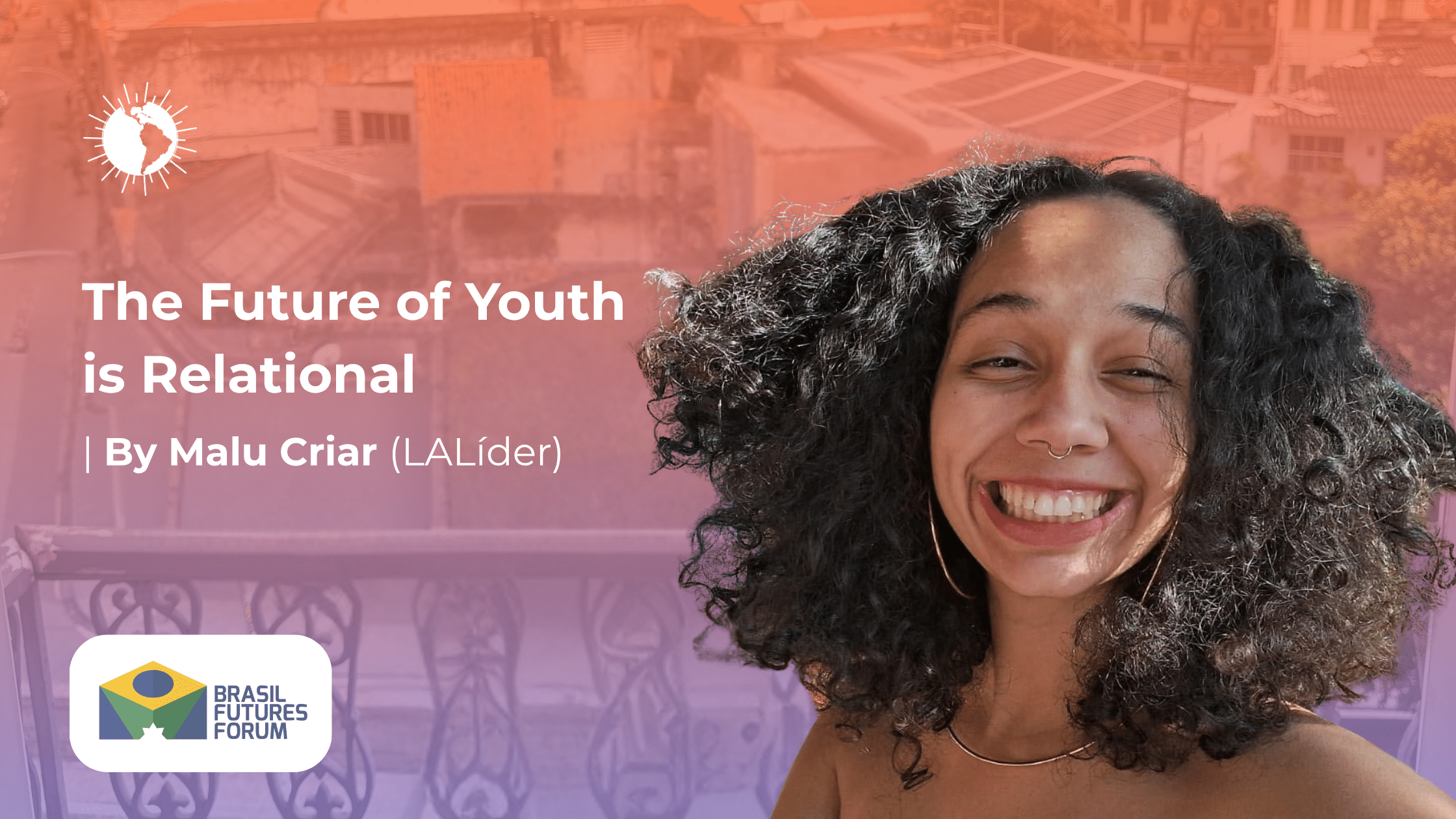
The Future of Youth Is Relational: What I Learned at the Brazil Futures Forum About Building Communities to Imagine Tomorrow
Throughout my childhood, I was told that dreaming was for those who could afford it. For those who had money, opportunities, or some kind of privilege that allowed them to imagine beyond what was already given. I was told that changing the world was an illusion, a utopia, and that, at most, I could follow the script: study, get a stable job, get married, have a family, and learn to call that the future. But there was always a restlessness inside me that never quite allowed that story to make sense. Why did the future of some people seem more possible than that of others? Why did some grow up learning to imagine who they could become, while others first learned everything they could not become?
The future came to us much more as a threat than as a possibility.
That question took on another dimension when I began looking at my own generation. We are young people who have grown up amid polycrises: we have lived through a pandemic, an increasingly tangible climate emergency, wars, economic and social instability, technological acceleration that is transforming the way we study, work, and relate to one another, and, at the same time, an epidemic of loneliness. The future came to us much more as a threat than as a possibility. And there is an even greater contradiction: at the same time we were taught to fear it, we were also given the responsibility of fixing it. We are expected to save the planet, create solutions, innovate, and reinvent the world. But when we feel that we have to take on problems larger than any individual, we begin to confuse leadership with overload and disconnect from ourselves, from life, and from other people.
Colonization also happens in our imagination.
When I began studying futures, I came to understand that colonization also happens in our imagination. It appears when we believe that certain forms of knowledge are superior, when we look to foreign places as though they know more about tomorrow than our own territories do. I, too, have been shaped by this imaginary. And it was along this path that the idea of counter-colonization, from Nêgo Bispo, began to make sense to me: it is not enough to remove a colonial logic; we need to create other ways of existing, thinking, and building worlds from our own territories, memories, and knowledge. And perhaps that is why one of the most sophisticated technologies of the future remains one of the oldest: our ability to come together.
The future is not a distant abstraction.
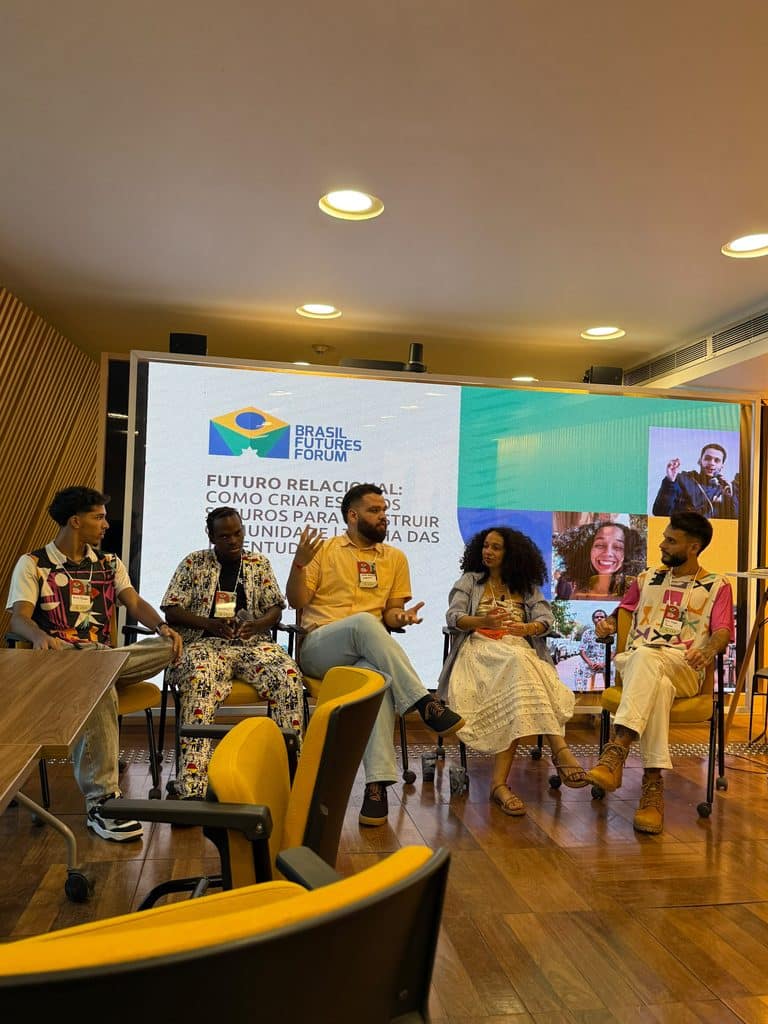
And that was the provocation I brought, together with Pedro Mariano (LALA), Luis Sérgio (NEX and O Futuro das Coisas), Bruno Felipe, João Penin (Instituto Caldeira and LALA), and Kizua Trindade (Instituto Caldeira), to the Youth Track at the Brazil Futures Forum (BFF): the future of youth is relational! Young people are plural, shaped by different territories, histories, races, classes, cultures, and ancestries. And from these intersecting crossroads, possible futures emerge.
The BFF, held in Rio de Janeiro from August 22 to 24, 2026, brought together people, organizations, and different fields of knowledge to think about futures from Brazil and Latin America, connecting themes such as technology, regeneration, culture, territory, ancestry, and innovation. The program took place across different spaces throughout the city and converged at the Museum of Tomorrow, creating an experience that, for me, conveyed something important: the future is not a distant abstraction. It is also built in territories, relationships, and the experiences we choose to create now.
I am a consequence of the communities I have found.
At LALA, I learned that a leader is authentic. Today, I understand authenticity also as this: allowing our being to find the space to act. And when I received the invitation to be a curator and ambassador for the Youth Track, I felt an enormous sense of joy. It was very special to put my being into action through what I have been building. In a way, I was testing the thesis and watching my own journey find a place in the world.
Within the Youth Track, we moved those who will live the future from the margins to the center of authorship of tomorrow. We created gatherings around territory, the body, memory, authentic communities, the right to dream, and, above all, how to create spaces where everyone can create together. This movement taught me that leadership also means making space for other people to arrive. It was beautiful to see my friends, with their different crossroads, and our partner communities shining, because the future we dream of is plural and has a place for everyone to arrive.
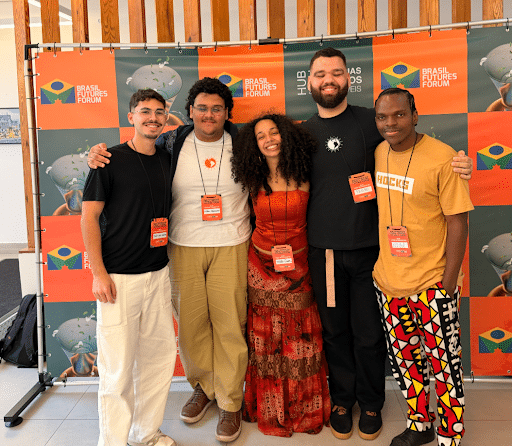
I am a consequence of the communities I have found. They were relationships, people, and spaces that expanded what I believed was possible for me. LALA was and continues to be one of those communities. And that is why I dream of places where a young person can arrive without needing to have all the answers, where they can experiment, belong, create, and, above all, remember that the future can also belong to them.
So the question that remains after the Brazil Futures Forum is not “What future do we want to build?” but rather, “Who do we want to build it with?”
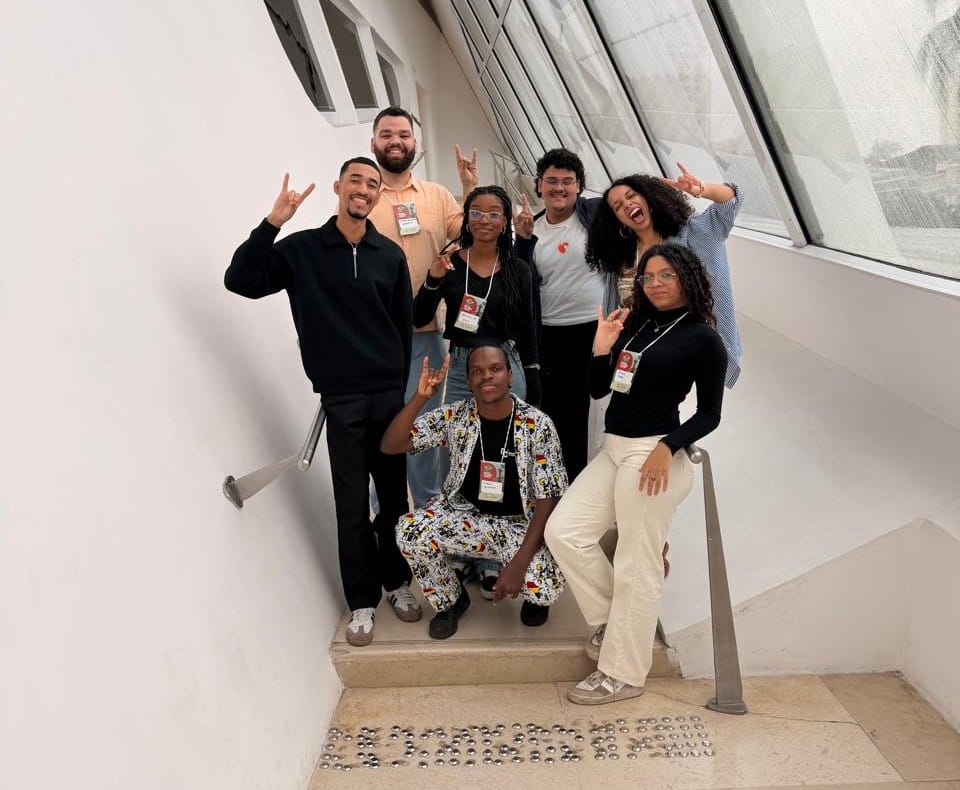
Pedro Mariano, Otávio Miranda, Alanna Assis, Nicolas Nepomuceno, Malu Criar, Kizua Trindade e Vitória.
Learn more about the Brasil Futures Forum: https://www.brasilfuturesforum.org/
By Malu Criar — LALA Leader and camp facilitator at LALA